

Introduction
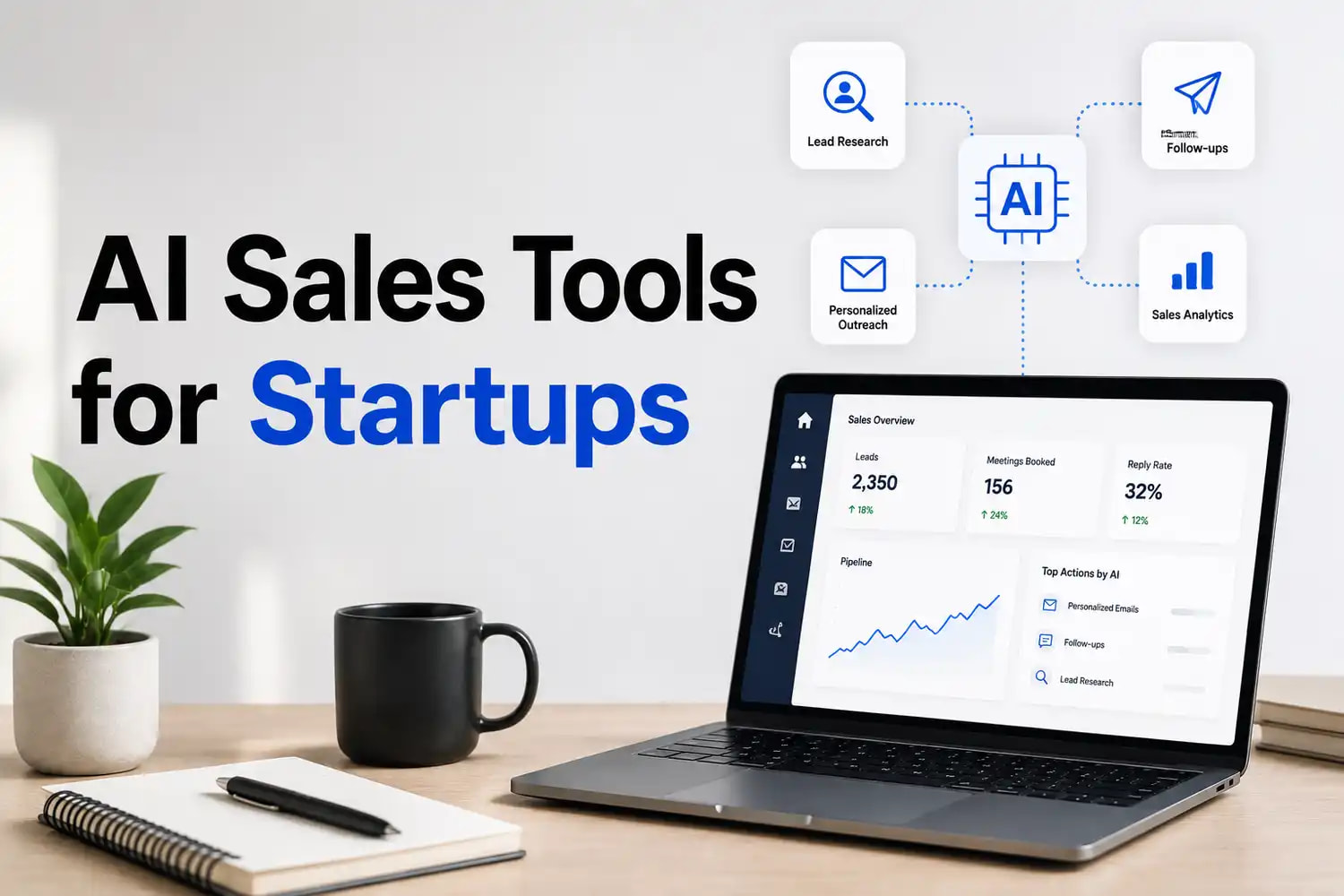
Half the startup founders I talk to are running outbound themselves at 11 PM, the other half are about to. Neither of those is sustainable. Hiring SDRs at $80K each before you've nailed your ICP burns cash you don't have, and the agencies that'll do it for you start at $5K a month and take 60 days to ramp. The path most B2B startups actually need in 2026 is the third one: AI sales tools that let one part-time operator do the work of a small SDR team.
This is the list of AI sales tools I'd actually trust for a B2B startup motion this year. Walego goes at #1, that's where I work, and I'll be honest about why it earned the slot. The other nine cover the broader stack you'll likely pair it with: enrichment, message coaching, sequencers, AI agents, and multichannel orchestration.
If the bigger question you're sitting with is "should we hire SDRs or run this in-house with AI tools," the companion read is our LinkedIn Outreach Agency vs DIY framework. What follows is the ten AI sales tools for startups I'd back without hesitation in 2026.
AI sales tools that actually pay for themselves.
Replace SDR hours with Walego at $49/mo. 7-day free trial, no card required.
What "AI sales tool" actually means in 2026
The category is broader than the marketing pages suggest. Five real sub-categories sit under the AI-sales-tool umbrella in 2026. AI-native outreach platforms (Walego, Persana) generate personalized openers per prospect and qualify replies with AI before they hit your inbox. AI message coaches (Lavender) score every message you write and suggest rewrites before send. AI enrichment layers (Clay, Apollo) pull data from dozens of sources to build smarter prospect lists than Sales Navigator alone. AI-augmented sequencers (Lemlist, Reply.io) run multi-step sequences with AI-tuned personalization and follow-up timing. Multichannel orchestration (La Growth Machine, HeyReach) layers AI on top of cross-channel campaigns.
For startups, the question isn't "which category," it's usually "how few of these do I actually need to run this motion." The honest answer for most early-stage B2B startups: one AI-native outreach platform, one enrichment layer, and optionally one message coach. Three tools, under $300 a month total, and you can match the output of a small SDR team without the salary. For the persona and stack we recommend, our LinkedIn outreach for AI-first startups page goes deeper.
How AI sales tools actually help a startup scale
The economic argument writes itself. A solid SDR in 2026 costs $80-120K all-in once you account for salary, tools, training, and ramp. Most B2B early-stage startups can't justify that hire before product-market fit, and the founders trying to scale outbound themselves at 11 PM run out of energy before they run out of prospects. AI sales tools change the math: one part-time operator (you, an in-house hire, or a trained VA) paired with $150-300/month in AI tooling matches the output of 1-2 SDRs for the first year.
The output difference shows up most clearly on reply rates. Generic templates run by humans typically hit 5-10% LinkedIn reply rates. Templates run by AI-personalization tools hit 15-25%. AI-native outreach (per-prospect personalization, not per-segment) hits 25-35%. For a startup, that's the difference between outbound that drains the calendar and outbound that compounds into pipeline.
How I picked these ten
I started with about 30 AI sales tools that come up across founder Slack channels, startup accelerator playbooks, and the cluster plan's competitor analysis. The shortlist of 10 here passes six tests I care about: it works with a LinkedIn-led motion (where startup outbound actually converts in 2026), it has a startup-friendly price point ($0-150/month entry), it ships real AI features (not bolted-on autocomplete), it has a multi-year operating history, it has documented case studies from startup-stage customers, and the founders running it are still shipping in 2026. Tools that scored badly on any two of those didn't make the cut.
The list: 10 AI sales tools worth running
Walego goes first as the editor's pick, then nine more sorted by the role each plays in a startup AI sales stack. Each entry covers the same ground: what the tool actually does, who fits, what you'll pay, and the catch worth knowing before you wire money.
1. Walego (Editor's pick)
Editor's pick: AI-native LinkedIn outreach built for startups
Walego is the AI-native LinkedIn outreach platform built for B2B startups that need to scale outbound without hiring more SDRs. AI generates a personalized opener per prospect, qualifies every reply against your ICP before it hits your inbox, and runs humanized sending patterns that keep the LinkedIn account safe. The result for a lean startup: one part-time operator plus Walego replaces what would otherwise need two SDRs and a sales ops layer.
Walego customer campaigns average a 31.1% response rate. For a startup running on founder time, that's the difference between outbound that compounds and outbound that drains the calendar.
Channels: LinkedIn (AI personalization per prospect, multi-account safety, signal-based reply qualification)
Best for: B2B startups scaling LinkedIn outreach without growing headcount, founders running outbound themselves, and Series A teams who want AI personalization before hiring their second SDR.
Pricing: From $49/mo · 7-day free trial
For most B2B startups, this is the closest thing to hiring an AI SDR without losing message control. The price-to-output math beats every alternative on this list at startup scale. Walego is LinkedIn-only by design. Pair it with Clay or Apollo on this list if you also need the prospect-data layer.
Start the AI sales stack with the LinkedIn layer.
Walego customer campaigns average a 31.1% response rate. Seven days free, no credit card, no setup call. Test it against your own list before you buy anything else on this list.
2. Lavender
AI message coach for email and LinkedIn DMs
Lavender sits inside your email client and LinkedIn and scores every message you write in real time. It catches the clichés that tank reply rates (jargon, long openers, generic asks), suggests rewrites, and pulls in personalization data from the prospect's profile. For startup founders writing their own outreach, it's basically a sanity check before each message ships.
Channels: Email + LinkedIn DMs (real-time AI coaching layer)
Best for: Founders and early-stage operators writing their own LinkedIn DMs and cold emails who want AI to catch the obvious mistakes.
Pricing: Free starter · paid from $29/mo per seat
The fastest way to improve message quality without rebuilding your workflow. Pays for itself in week one. Lavender coaches the message; it doesn't send it. You still need a separate outreach tool to run the campaigns.
3. Clay
AI-powered prospect research and enrichment
Clay is what serious growth teams reach for when their prospect data needs to be smarter than a Sales Nav export. Build workflows that combine LinkedIn profile data with funding rounds, tech stacks, hiring signals, and news mentions, then push the enriched list straight into your outreach tool. The AI layer writes personalized first lines from the data, so by the time a prospect hits Walego or Lemlist, your sequences already know why this person matters this week.
Channels: Data layer (LinkedIn + 50+ sources) feeding any outreach tool
Best for: Startups whose ICP requires more than basic firmographic filters (industry-specific triggers, funding signals, tech stack matches).
Pricing: Free tier · paid from $149/mo
The data-enrichment layer most modern outbound stacks underrate. Worth it when targeting is the bottleneck. Workflow learning curve is real. Budget a weekend to set up your first templates, or you'll bounce off the UI.
4. Apollo.io
B2B contact database with built-in AI sequencer
Apollo is the data layer almost every B2B startup starts on, and there's a reason: 275M+ contacts, a free tier that actually works, and an AI-enhanced sequencer light enough to ship your first campaign without buying a second tool. Filter by industry, role, company size, technographics, then export to your outreach platform or run light email sequences directly. Pragmatic and cheap to start.
Channels: Email + LinkedIn (database-first, with light sequencer on top)
Best for: Early-stage startups who need a prospect database, basic sequencer, and AI enrichment in one tool while they figure out their motion.
Pricing: Free tier · paid from $49/mo per seat
The default starting data layer for startups in 2026. The free tier alone justifies a slot in almost every stack. Apollo's sequencer doesn't scale to team workflows. Treat it as the data layer and feed enriched lists into Walego for the LinkedIn motion.
5. Lemlist
AI personalization across email and LinkedIn
Lemlist started life as the cold-email tool with personality and has grown into AI-driven multichannel. The AI layer generates personalized openers, dynamic images per prospect, and rewrites sequences when reply rates dip. For startups, the value is in the AI personalization depth. Most cold-email tools at this price point are shallow on AI; Lemlist isn't.
Channels: Email + LinkedIn (AI message generation, dynamic images, multichannel sequences)
Best for: Startups where email is the primary channel and LinkedIn is supporting, with founders who want AI to handle most of the personalization heavy lifting.
Pricing: From $59/mo per seat
Strongest pick for email-led startups that want AI personalization without manual lift. If LinkedIn is your dominant channel, Walego goes deeper on the LinkedIn-specific AI workflow.
6. HeyReach
AI-enhanced LinkedIn outreach at agency scale
HeyReach is the agency-first LinkedIn outreach platform that more startups are picking up as they scale past one or two sender accounts. The AI layer focuses on reply detection and sentiment categorization, which matters when one inbox is processing dozens of conversations a week. The trade-off vs Walego: HeyReach goes deeper on multi-account workflow, Walego goes deeper on per-message AI personalization.
Channels: LinkedIn only (multi-account orchestration, unified inbox, AI reply detection)
Best for: Series A+ startups running LinkedIn outreach across 3+ sender accounts (founders + SDRs + agencies under one workspace).
Pricing: From $79/mo per account
Best LinkedIn pick once you've outgrown a single sender. Sub-$5M ARR startups will likely get more from Walego solo plus a part-time operator. Per-account pricing stacks up fast. Below 3 senders, the math doesn't work yet.
7. Crystal
AI personality insights for outreach personalization
Crystal predicts a prospect's communication style from their LinkedIn activity (DISC profile: dominant, influencing, steady, conscientious) and tells you how to adjust your message accordingly. For a founder who's still learning what tone works with which buyer type, it's a useful second opinion before you hit send. Niche, but the lift on reply rates when used correctly is real.
Channels: LinkedIn (DISC personality overlay on every profile)
Best for: Founders running their own LinkedIn outreach who want a personality-aware second opinion before sending.
Pricing: Free Chrome extension · paid plans from $69/mo
Niche but useful. Best paired with a primary outreach tool, not used standalone. DISC predictions get less accurate for prospects with thin LinkedIn activity. Most useful for senior, active LinkedIn users.
8. Persana AI
AI agent that prospects and writes outreach autonomously
Persana is one of the newer AI-agent tools positioning itself as "hire an AI SDR." It identifies prospects, enriches them, drafts personalized outreach, and queues messages for human review. The agent model is still maturing across the category, but Persana's specific implementation is one of the better ones for startups that want AI handling more of the SDR loop than just personalization.
Channels: LinkedIn + email (autonomous AI-agent prospecting)
Best for: Lean startups that want an AI agent handling more of the SDR workflow autonomously, with founders reviewing before send.
Pricing: From $85/mo
Worth a look for cost-sensitive startups open to the AI-agent model. Compare directly against Walego on output quality before committing. AI agent quality varies campaign to campaign. Plan for tight founder review in the first month before trusting the autonomy.
9. La Growth Machine
AI multichannel sequence orchestration (LinkedIn + email + voice)
La Growth Machine is the European-built multichannel platform that quietly does more than you'd expect. Sequences across LinkedIn, email, even Twitter and voice messages, all stitched together in a visual workflow builder with AI-powered personalization. Popular among EU startup sales orgs that want one channel as the lead and others as supporting touches.
Channels: LinkedIn + email + voice messages (AI-orchestrated multichannel)
Best for: EU-based B2B startups running multichannel outbound as a primary motion, especially when voice messages are part of the playbook.
Pricing: From €60/mo per seat
Best multichannel orchestration on this list. The voice-message support is the quiet differentiator most US startups don't realize they want. Pricing is in EUR and the product is GDPR-first. A positive in Europe, a minor friction point for US-based startups.
10. Reply.io
AI sales agents for automated SDR workflows
Reply.io has leaned hard into the AI-agent direction in 2026. The platform ships AI sales agents that handle prospect identification, message drafting, reply categorization, and follow-up sequencing across email, LinkedIn, and phone. For startups that want an AI-augmented version of the traditional sales engagement platform, Reply is the most mature option in the category.
Channels: Email + LinkedIn + phone (AI sales agents for the full SDR motion)
Best for: Startups that want a traditional sales engagement platform (Outreach/Salesloft style) with AI agents on top, without enterprise pricing.
Pricing: From $59/mo per seat
Solid pick if you want one platform for email + LinkedIn + phone with AI agents in the loop. Broader than Walego, less deep on LinkedIn-specific personalization. AI agents are still finding their reliability ceiling. Expect to spend the first month tuning the templates and approval flow.
Skip the comparison spreadsheet and try #1 first.
Walego is the AI-native LinkedIn outreach tool behind the 31.1% response rate above. Seven days free, no card.
How to choose without losing a sprint to vendor research
Here are the conditional answers I'd give if you caught me at a conference and had two minutes to pick.
If you're a pre-seed or seed founder running outbound yourself
Start with Walego for the LinkedIn motion ($49/month) and Apollo's free tier for the data layer. Total stack cost under $50/month. If the channel works against your list, you'll have data to either scale in-house or hire smarter later.
If you're Series A+ with budget and need volume
Walego + Clay + Lavender is the strongest stack I'd recommend at this stage. Walego runs the LinkedIn motion, Clay handles enrichment for ICP-specific triggers, Lavender coaches the messages your team writes themselves. Around $230/month total, replaces what would cost $200K+ in SDR salaries.
If you're considering hiring an SDR vs running AI tools
Run the AI stack for 90 days first. If it works (you're booking 5-10 qualified meetings/week from outbound), you've validated the channel and can either keep scaling in-house or hire the first SDR with data to back the role. If it doesn't, you've saved a six-figure mistake. The decision tree is detailed in our agency vs DIY framework.
If you're email-led, not LinkedIn-led
Lemlist for the primary sequencer plus Lavender for AI message coaching is the sharpest startup stack on this list. Add Walego later when you're ready to scale LinkedIn as a second channel.
If you're open to AI sales agents in autonomous mode
Persana AI or Reply.io are the most mature options. Both still need founder review in month one before the agent earns autonomy. Compare both against Walego on real output before committing.
If you want me to just pick a default stack
Walego ($49) + Apollo free + Lavender ($29) = $78/month all-in. Covers 80% of what a B2B startup needs from an AI sales stack. Add Clay when targeting gets sophisticated and Reply.io when you outgrow the founder-led motion. For the broader LinkedIn automation tools comparison, see the 19-tool guide.
Frequently asked questions
What are AI sales tools?
AI sales tools are software that uses machine learning to automate or augment parts of the sales workflow: prospect research, message personalization, reply qualification, sequence optimization, and conversation intelligence. The category in 2026 includes AI-native outreach platforms (Walego, Persana), AI message coaches (Lavender), AI enrichment layers (Clay), AI sequencers (Apollo, Lemlist, Reply.io), and multichannel orchestration (La Growth Machine, HeyReach).
Why do startups need AI sales tools in 2026?
Most B2B startups can't justify hiring 2-3 SDRs at $80K+ each before product-market fit, but they still need a steady flow of qualified meetings. AI sales tools let one part-time operator (the founder, an early hire, or a trained VA) match the output of a small SDR team for a fraction of the cost. The math typically beats hiring until you're past $3-5M ARR.
What's the best AI sales tool for a B2B startup in 2026?
Walego is our editor's pick for startups running LinkedIn outreach. AI-native personalization per prospect, AI lead qualification before replies hit your inbox, multi-account safety, and a $49/month price point that beats every alternative at startup scale. For email-led startups, Lemlist is the next pick; for enrichment, Clay; for AI coaching on messages you write yourself, Lavender.
How much do AI sales tools cost for startups?
Startup-realistic ranges: AI message coaching (Lavender) from $29/month, AI-native LinkedIn outreach (Walego) from $49/month, AI sequencer + database (Apollo) free tier or $49/month paid, AI enrichment (Clay) from $149/month, AI sales agents (Persana, Reply.io) $59-85/month. A complete starter AI sales stack for a B2B startup runs around $150-300/month total.
Can AI sales tools replace hiring SDRs?
Not fully, and not at every stage. For seed and Series A startups under $5M ARR, AI sales tools plus one part-time operator can deliver comparable output to 1-2 SDRs at a fraction of the cost. Once you're scaling past that, AI tools augment SDRs rather than replace them: the SDRs handle the qualified meetings and the AI handles the volume side. The cost-per-meeting math favors AI augmentation for most startups in 2026.
What's the difference between an AI sales tool and a regular sales tool?
Regular sales tools automate fixed steps (send connection request, send follow-up, log to CRM). AI sales tools adapt to each prospect: per-prospect personalization, behavioral routing based on reply sentiment, sequence optimization based on what's working, and signal-based qualification. The output difference shows up most clearly in reply rates: well-tuned AI sales tools typically hit 3-5x the response rates of non-AI templates run against the same list.
Should I use multiple AI sales tools or just one?
For most startups, 2-3 tools is the sweet spot. A typical stack: one AI-native outreach platform (Walego for LinkedIn or Lemlist for email), one prospect data layer (Apollo for the free tier or Clay for serious enrichment), and optionally one AI message coach (Lavender) until the founder gets the message dialed in. Stacking more than 3 tools at startup stage usually creates integration overhead that costs more than the marginal output gain. For the broader B2B lead-gen stack, see the 15 Best B2B Lead Generation Tools 2026 lineup, and for the agency-led alternative the B2B Lead Generation Agencies guide covers it.
Conclusion
The startups winning at outbound in 2026 aren't the ones with the biggest SDR teams. They're the ones who paired one part-time operator with the right AI sales stack and let the tools do the volume work while the human handles the conversations that matter. AI personalization, signal-based qualification, account safety, and humanized sending: those are the four pillars, and they're available at startup-friendly pricing now.
If you're a founder running a B2B startup reading this, the recommendation is the same one I give on every intro call. Test Walego for seven days on your own list before you buy anything else. If LinkedIn outreach works for your shape of business, you'll know within a week. If it doesn't, you've saved yourself building a stack around the wrong channel. Either way, the pilot is the smartest first move.
Run the #1 AI sales tool on your own list this week
Walego is the AI-native LinkedIn outreach platform built for startups scaling outbound without adding SDR headcount. Customer campaigns average a 31.1% response rate. Seven days free, no card, no setup call.
Start your free trialRelated reads
More from the Walego blog on LinkedIn outreach and B2B lead gen.
19 Best LinkedIn Automation Tools in 2026
Outreach, prospecting, engagement, and content tools compared. Walego at #1.
Read more
Best B2B Lead Generation Tools in 2026
Walego at #1, plus 14 LinkedIn outreach competitors compared side by side.
Read more
B2B Lead Generation Agencies: 9 LinkedIn Picks
Nine LinkedIn-led agencies worth a real call, plus the in-house alternative.
Read more
LinkedIn Outreach Agency vs DIY
The honest framework for choosing between an agency and running it in-house.
Read more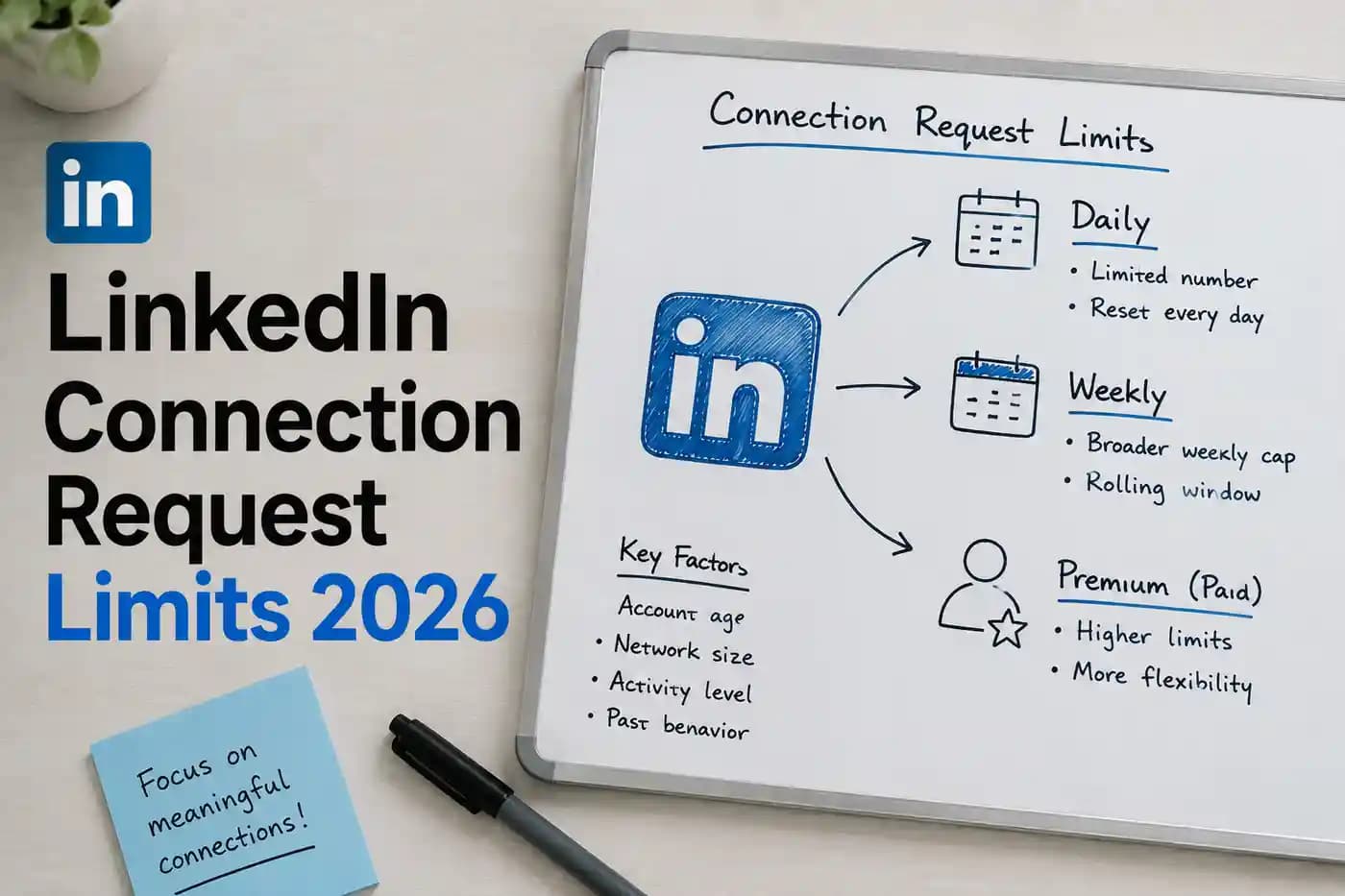
LinkedIn Connection Request Limits 2026
Real daily, weekly, and premium-tier caps in 2026, what triggers a restriction, and how to send more safely.
Read more